Waterfront buyer takeaways for 2026
- Flood risk is set by the exact address, not the neighborhood. Two homes on the same street can sit in different FEMA flood zones.
- Zone matters for financing and insurance. A home in a Special Flood Hazard Area (such as Zone AE) usually triggers a lender flood-insurance requirement.
- Never guess the premium. Get a written flood-insurance quote for the specific property during your option period.
- Documents protect you. Review the FEMA map, the seller's disclosure, and any elevation certificate before you commit.
Quick answer: what should a Kingwood or Lake Houston waterfront buyer check first?
The short answer: verify the flood risk of the exact address before you write an offer. Pull the property on the current FEMA Flood Map Service Center, confirm the flood zone and whether it sits in a Special Flood Hazard Area, then line up your due diligence: the seller's disclosure notice, any existing elevation certificate, your lender's flood-insurance requirements, and a written insurance quote. Flood status can differ lot by lot along the Lake Houston shoreline, so a neighborhood reputation is never a substitute for an address-level check.
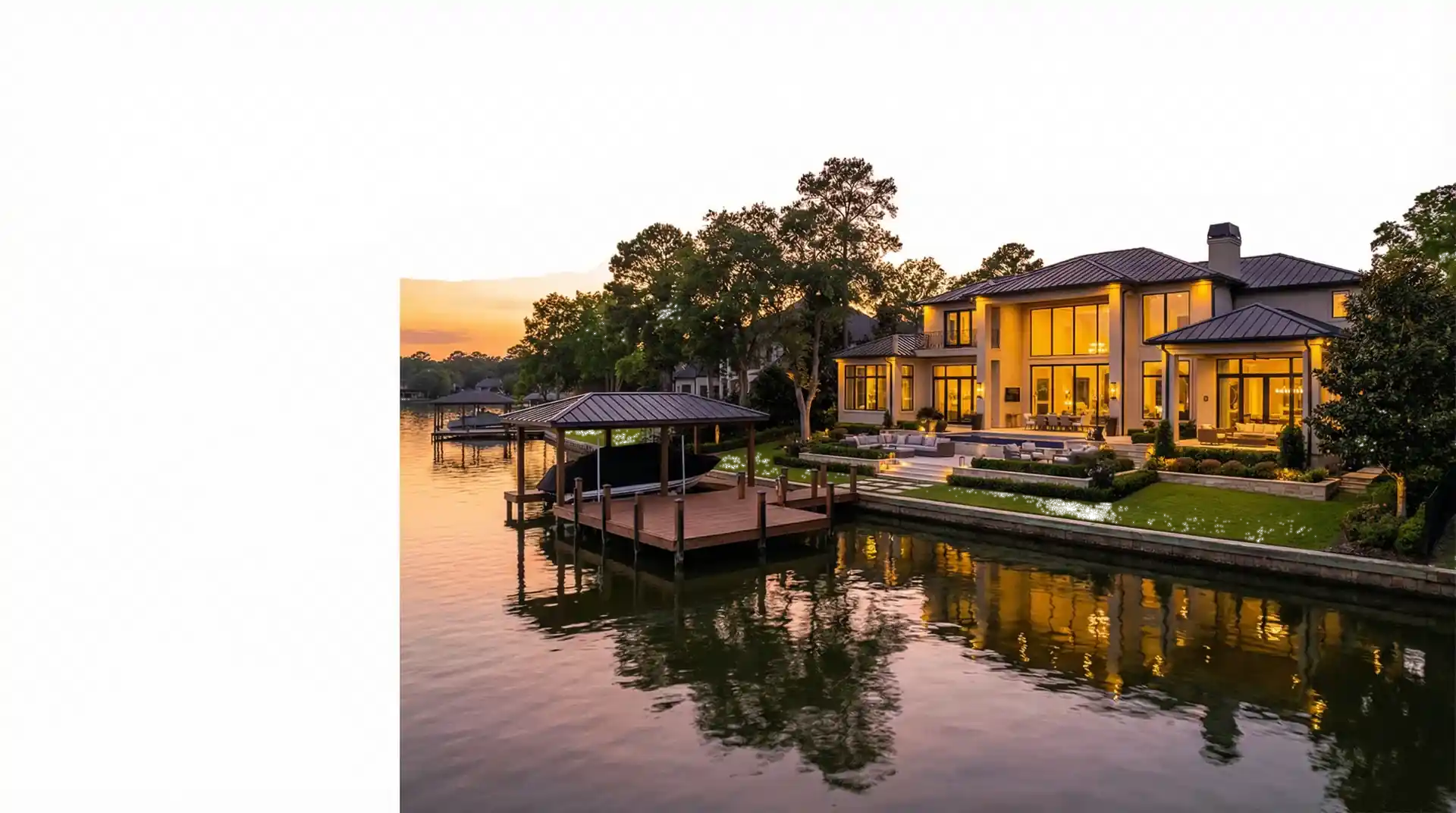
Flood zone vs. floodway: why the distinction matters
Not all waterfront properties carry the same risk. A floodway is the channel of a river or stream, plus the adjacent land, where water is expected to move with velocity during a flood. Building, rebuilding, and major renovations inside a floodway face severe restrictions. Broader flood zones — for example Zone AE — mark a Special Flood Hazard Area with roughly a 1% annual chance of flooding. Those zones typically require flood insurance if you carry a mortgage, but they generally allow standard construction. Knowing which category a property falls into shapes everything from insurance to future remodeling plans.
Verify the exact address, not the neighborhood
You cannot assume a property's flood status from its street or subdivision. Risk can change from one house to the next along the Lake Houston waterfront and throughout Kingwood. Always confirm the exact address using official resources:
- FEMA Flood Map Service Center — current effective flood maps and zone designations.
- Harris County Flood Control District (HCFCD) — local watershed, drainage, and flood-risk information.
- City of Houston Floodplain Management — floodplain rules and permitting for properties inside city jurisdiction.
Because map revisions and local drainage projects happen over time, confirm you are viewing the current effective map for that address rather than an older version.
Insurance and lender implications
If a home is in a Special Flood Hazard Area, a federally backed or federally regulated lender will require flood insurance as a condition of the loan. Premiums can vary significantly based on the home's elevation, prior claims history, and the coverage limits you choose. Never predict a flood-insurance price. Ask a licensed insurance professional for a written quote on the specific property during your option period, and confirm your lender's exact requirements in writing before you remove contingencies.
Elevation certificates and seller disclosures
An elevation certificate documents a home's elevation relative to the base flood elevation and is prepared by a licensed surveyor or engineer. When a seller already has one, it is a valuable input for insurance rating and for understanding how the structure sits relative to expected flood levels. Ask for it early. Separately, read the seller's disclosure notice carefully for any history of flooding, water intrusion, or prior insurance claims, and follow up on anything that is unclear before you write or firm up an offer.
Due-diligence checklist for a waterfront offer
- Look up the exact property address on the current FEMA flood map and note the zone.
- Cross-check HCFCD and City of Houston floodplain resources for the same address.
- Request any existing elevation certificate from the seller.
- Review the seller's disclosure notice for past flooding or claims.
- Get a written, property-specific flood-insurance quote from a licensed agent.
- Confirm your lender's flood-insurance requirements in writing.
- Factor insurance cost and flood risk into your offer price and terms.
Making a confident offer on Lake Houston waterfront
Waterfront ownership near Kingwood can be a wonderful long-term decision when the flood picture is verified rather than assumed. Use your option period to gather facts — the FEMA zone, disclosures, elevation, lender rules, and a real insurance quote — and let those facts shape your price, contingencies, and timeline. If two similar homes differ in flood zone or insurance cost, that difference belongs in the negotiation. Start with buyer representation so someone is coordinating the address-level checks and protecting your option period while you decide.
FAQ: Lake Houston and Kingwood waterfront flood zones
How can I check the flood zone of a specific Kingwood or Lake Houston home?
Look up the exact street address on the current FEMA Flood Map Service Center, then cross-check the Harris County Flood Control District and City of Houston floodplain resources. Flood risk can change from one lot to the next, so never rely on a neighborhood-wide assumption. Also review the seller's disclosure notice and any elevation certificate before you write an offer.
What is the difference between a flood zone and a floodway?
A floodway is the channel of a river or stream, plus adjacent land, that carries fast-moving water during a flood; it carries higher risk and strict building and renovation restrictions. Broader flood zones, such as Zone AE, mark a Special Flood Hazard Area with roughly a 1% annual chance of flooding, where a mortgage lender typically requires flood insurance but standard construction is allowed.
Will I be required to buy flood insurance on a Lake Houston waterfront home?
If the home sits in a Special Flood Hazard Area, a federally backed or federally regulated lender will require flood insurance as a condition of the loan. Premiums vary with elevation, prior claims, and coverage limits. Do not rely on a predicted price; obtain a written quote from a licensed insurance professional during your option period.
What is an elevation certificate and why does it matter?
An elevation certificate is a document, prepared by a licensed surveyor or engineer, that records a home's elevation relative to the base flood elevation. It can affect flood insurance rating and helps you understand how the structure sits relative to expected flood levels. If a seller already has one, request it early; if not, you can ask a professional whether obtaining one is worthwhile.
Nancy "Peaches" Brown can help you request an address-specific property comparison and coordinate the flood-zone, disclosure, elevation, and insurance checks before you write an offer. Review the Kingwood community guide, explore the Lake Houston area, see buyer resources, then request a private consultation. Flood, insurance, engineering, and legal determinations come from the appropriate professionals and official sources.